Zepbound for Sleep Apnea Cut Apnea Scores by About Half
- Zepbound is the first drug the FDA approved for sleep apnea. It is for adults with obesity and moderate to severe obstructive sleep apnea.
- In two year long trials, apnea scores fell 25 to 29 events an hour on the drug, versus about 5 on placebo.
- About half of the people on the drug reached a near normal score. The other half did not, so keep your CPAP until a new sleep test.
- Medicare Part D can cover it for sleep apnea. The new $50 Medicare GLP-1 Bridge does not take people with sleep apnea.
- Cash price from Lilly is $299 to $449 a month, about $5,600 for the first year by our count.
Contents
This page is general information. It is not medical advice. Talk to your doctor before you start, stop or change any medicine or your CPAP. If you wake up gasping, choking or short of breath, call your doctor. For severe trouble breathing, call 911.
A lot of people think a weekly weight loss shot means the CPAP can go in the closet. The trials that won Zepbound its sleep apnea approval say not yet. After a full year on the drug, only 42% to 50% of people reached a near normal apnea score.2
We wrote this for anyone whose doctor, friend or feed has brought up Zepbound for sleep apnea. You’ll find who it is approved for, what the trials found, what to do with your CPAP and who pays for it in 2026.
What the FDA Approved, and for Whom
The FDA approved Zepbound for sleep apnea on December 20, 2024. The label covers moderate to severe obstructive sleep apnea in adults with obesity, used along with a lower calorie diet and more activity.1 The FDA called it the first drug for the condition.1
Moderate to severe means an apnea score, or AHI, of 15 or more breathing events an hour. That was the cutoff in the trials, along with a body mass index of 30 or more.2 People with diabetes were left out of those trials, and so were people with central sleep apnea.2
You give yourself one shot a week. The label starts everyone at 2.5 mg for 4 weeks, then 5 mg. The dose can go up 2.5 mg at a time, every 4 weeks or more.3 For sleep apnea, the dose you stay on is 10 mg or 15 mg.3
Count the steps and you get a slow start. Where a number is ours, the sentence says what it was measured on. By our count from the label steps, the soonest you reach 10 mg is week 13.3 So the first few months are mostly about getting used to the drug.
Will sleep apnea qualify me for Ozempic?
Not for sleep apnea by itself. The sleep apnea approval went to Zepbound, which is tirzepatide.1 Ozempic is a different drug. The Zepbound label also says not to take it with any other GLP-1 drug.3 Ask your doctor which one fits your other health needs.
Who should not take it?
The FDA lists three groups who should not use it. You or a family member had medullary thyroid cancer, you have a gene condition called MEN 2, or you had a bad allergic reaction to tirzepatide.1
The FDA also warns about pancreatitis, gallbladder problems, kidney injury and low blood sugar when it is taken with insulin.1 Tell your doctor about any planned surgery, since food in the stomach can be a risk under deep sedation.1 The sleep medicine group AASM adds caution for pregnancy, eating disorders and depression.8
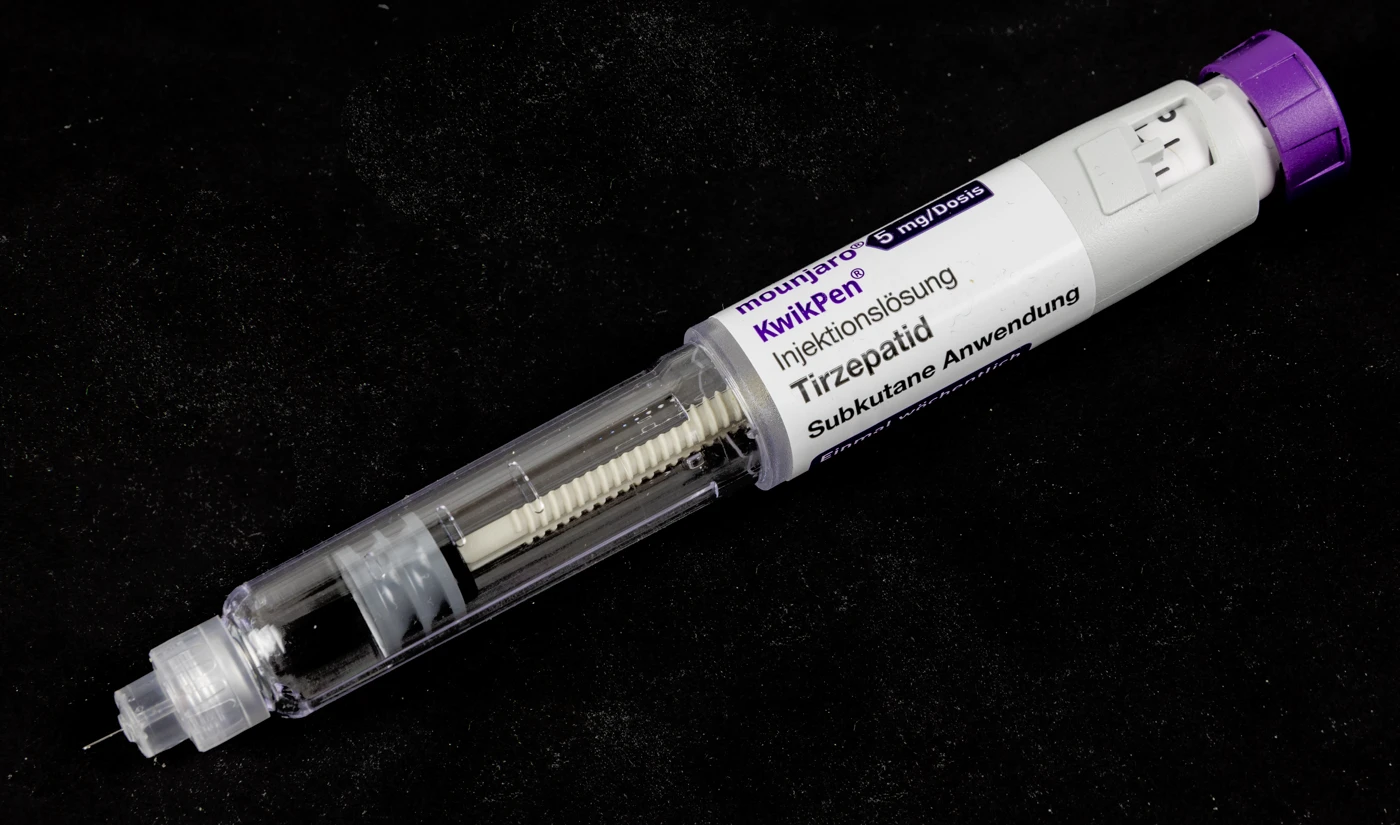

What the Two Trials Found
The approval rests on two trials with 469 adults in all.2 Trial 1 took people who were not using a CPAP. Trial 2 took people who already were. Each group got the drug or a placebo shot for 52 weeks.
These were not mild cases. The average apnea score was about 50 events an hour, and the average BMI was about 39.2 People on the drug lost 17.7% of their weight in trial 1 and 19.6% in trial 2.2
- In trial 1, the apnea score fell 25.3 events an hour on the drug and 5.3 on placebo.2
- In trial 2, it fell 29.3 events an hour on the drug and 5.5 on placebo.2
- That is a drop of about 51% and 59% from where people started.2
- About 6 to 7 in 10 people on the drug cut their score by half or more.2
Who Reached the Near Normal Line After 52 Weeks
Share of people with an apnea score under 5, or 5 to 14 with little daytime sleepiness
Read that chart from the other side too. Even on the drug, about half of the people did not reach the near normal line after a full year.2 The trial report says that line is a level at which a CPAP may no longer be advised.2
One detail matters if you use a CPAP. People in trial 2 were told to stop their machine for 7 days before each sleep test, so the test showed their breathing without it.2 Their scores were not measured with the mask on. Eli Lilly, which makes the drug, paid for both trials.2
Does Zepbound have side effects?
Yes, and most are in the gut. The trial report says they were mostly mild to moderate and came on most while the dose was going up.2 The table shows the most common ones.
| Problem | Trial 1, shot vs placebo | Trial 2, shot vs placebo |
|---|---|---|
| Diarrhea | 26.3% vs 12.5% | 21.8% vs 8.8% |
| Nausea | 25.4% vs 10.0% | 21.8% vs 5.3% |
| Vomiting | 17.5% vs 4.2% | 9.2% vs 0.9% |
| Constipation | 15.8% vs 2.5% | 15.1% vs 4.4% |
| Quit the drug due to side effects | 4.4% vs 1.7% | 3.4% vs 7.0% |
The FDA list also includes belly pain, burping, reflux, hair loss, tiredness and redness where the shot goes in.1
Do You Still Need Your CPAP on Zepbound?
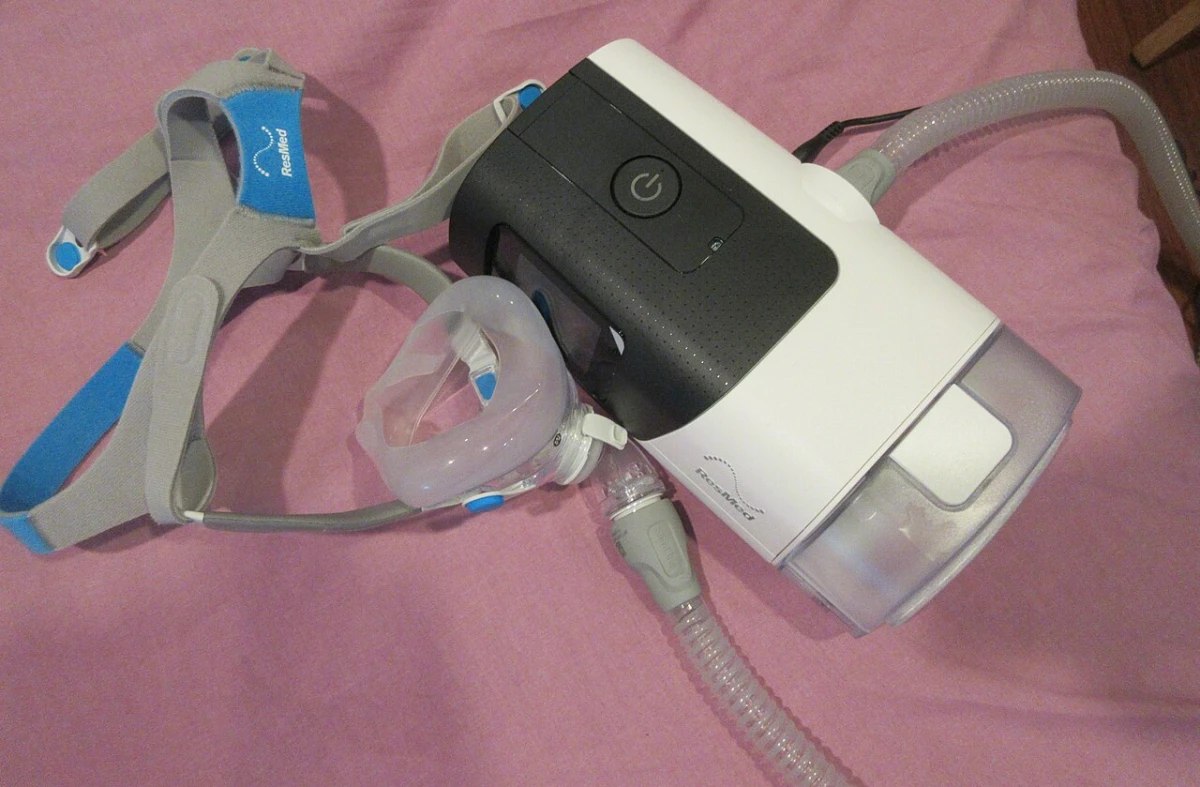
Yes, until a new sleep test says otherwise. The AASM tells doctors that the drug is not meant to replace a CPAP and that the machine should not be stopped without a proper recheck.8
Think of the timeline. Weight comes off over months, and the trials measured at week 52.2 Your airway is still closing at night during all of that time. The mask keeps you breathing while the drug works.
The recheck is a new sleep test, done with the CPAP off, once your doctor thinks the weight loss is real. Medicare covers CPAP for a score of 15 or more, or 5 to 14 with symptoms like daytime sleepiness or high blood pressure.9 If your new score falls below those lines, ask your doctor what changes.
Your score can look different from one lab to the next because of how breathing events get counted. Our guide to the 3% and 4% scoring rules explains why. Ask for the same rule on your before and after tests.

Who Pays for Zepbound for Sleep Apnea
Does Medicare cover Zepbound for sleep apnea?
It can, through your Part D drug plan. CMS lists moderate to severe obstructive sleep apnea as a use Part D plans may cover, and says people with it should get their GLP-1 through their Part D plan.4 Your plan sets the copay and may ask for prior approval first.
The new $50 Medicare GLP-1 Bridge is not the door for sleep apnea. It runs from July 1, 2026, to December 31, 2027, and covers weight management only.4 Medicare.gov says people with moderate to severe sleep apnea are not eligible for it, but their Part D plan might cover the drug.5 The Bridge also covers only the Zepbound KwikPen, not the vials or the single dose pens.4
Will private insurance cover it?
It depends on your plan. The AASM says coverage varies, many insurers want prior approval and the list price is $1,086.37 a fill.8 A letter from your doctor with your sleep test score, BMI and past treatments helps that request.8
If your work plan covers it, Lilly lists a savings card that can bring the pen down to as little as $25 a month. That card does not work with Medicare, Medicaid, the VA, TRICARE or other government plans.6
What does Zepbound cost without insurance?
Lilly sells it direct for cash. The 2.5 mg starting dose is $299 a month, 5 mg is $399, and 7.5 mg up to 15 mg is $449 when you refill within 45 days.6 Miss that window and the 10 mg to 15 mg doses go to $699.6
The table adds up one year of cash pay, our arithmetic from those prices. It assumes 13 fills of 4 weekly doses, one dose step every 4 weeks and no late refills.
| Fill | Weekly dose | Self pay price | Running total |
|---|---|---|---|
| 1 | 2.5 mg | $299 | $299 |
| 2 | 5 mg | $399 | $698 |
| 3 | 7.5 mg | $449 | $1,147 |
| 4 to 13 | 10 mg or 15 mg | $449 each | $5,637 |
That is about $5,600 for the first year, before needles and doctor visits. A CPAP costs money too. Our CPAP cost check shows what the machine and supplies run, so you can compare the two.
What Happens If You Stop Zepbound?
The weight tends to come back. In a separate trial called SURMOUNT 4, 670 adults lost about 20.9% of their weight over 36 weeks on the drug.7 Then some kept taking it and some switched to placebo for one more year.
- Those who kept going lost another 5.5%.7
- Those who switched to placebo gained back 14.0%.7
- 89.5% of those who stayed on it kept at least 80% of their weight loss. Only 16.6% did on placebo.7
That trial tracked weight, not sleep apnea. But the AASM warns that stopping the drug may undo the drop in apnea scores.8 So treat it like a long term drug, and keep your CPAP close if you ever stop.
Is there a sleep apnea pill coming?
One is under FDA review. A company called Apnimed filed a nightly pill named AD109, and the FDA set a target date of February 28, 2027.10 The company says there is no promise it will be approved by then, or at all.10 Unlike Zepbound, it is not tied to weight.10
Myths to Drop
The shot replaces the CPAP
Not on the trial data. After a year, about half the people on the drug still sat above the near normal line.2 The machine stays until a new sleep test and your doctor say it can go.8
The $50 Medicare deal covers it for sleep apnea
It does the opposite. People with moderate to severe sleep apnea are shut out of the Bridge and sent to their Part D plan instead.5
Any weight loss shot will do
Only Zepbound carries the sleep apnea approval.1 Your doctor may still pick another drug for another reason, but the sleep apnea data come from tirzepatide.
Compounded tirzepatide is the same thing
The AASM says compounded versions are not FDA regulated and may not hold the right drug, and tells doctors to steer patients away.8
We think Zepbound is a real step for people with obesity and moderate to severe apnea, and a slow one. Use the mask while the drug works, get retested before you change anything, and check your plan before the first fill. If you are not sure where you stand, our sleep apnea risk check is a good first step, and our list of sleep providers by state can point you to a doctor.
Renting a CPAP without insuranceReal monthly prices, what they leave out, and when buying wins.Handpicked
- Can losing 20 pounds cure sleep apnea?
- The 3% rule vs the 4% rule
- CPAP cost check
- Sleep apnea providers by state
Follow NightWells in Google Search to see more of our sleep apnea posts in your Top Stories.
Public Records Used
- U.S. Food and Drug Administration, FDA Approves First Medication for Obstructive Sleep Apnea, December 20, 2024. Opened October 2026.
- Malhotra and others, Tirzepatide for the Treatment of Obstructive Sleep Apnea and Obesity, New England Journal of Medicine, 2024 (PubMed Central full text). Opened October 2026.
- Eli Lilly, Zepbound prescribing information, revised August 2026. Opened October 2026.
- CMS, Medicare GLP-1 Bridge, Information for Providers. Opened October 2026.
- Medicare.gov, Weight loss drugs. Opened October 2026.
- LillyDirect, Zepbound self pay and savings card prices. Opened October 2026.
- Aronne and others, Continued Treatment With Tirzepatide for Maintenance of Weight Reduction in Adults With Obesity, the SURMOUNT 4 trial, JAMA, 2024 (PubMed). Opened October 2026.
- American Academy of Sleep Medicine, What clinicians should know about prescribing tirzepatide for sleep apnea, September 2025. Opened October 2026.
- CMS, National Coverage Determination 240.4, CPAP therapy for obstructive sleep apnea. Opened October 2026.
- Apnimed, FDA accepts New Drug Application for AD109, July 14, 2026 (PR Newswire). Opened October 2026.
NightWells publishes information, not medical advice. Nothing here replaces being seen by a clinician who can examine you.
Also on the Nightwell Blog
- Mouth Tape for Sleep Apnea Is a CPAP Helper, Not a CurePosted October 26, 2026
- Distilled Water for CPAP, and the One Tub That Takes TapPosted October 24, 2026
- The 3% Rule vs the 4% Rule for Sleep ApneaPosted October 22, 2026
- What Is the Pillow Trick for Sleep Apnea?Posted October 20, 2026
- Can Losing 20 Pounds Cure Sleep Apnea?Posted October 15, 2026
- What Is the Japanese Trick for Sleep Apnea?Posted October 12, 2026
- Is Sleep Apnea Dangerous? What Untreated Sleep Apnea Can DoPosted October 9, 2026
- Is Sleep Apnea Curable? When It Can Go Away and When It Will NotPosted October 9, 2026
- Does Insurance Cover a Sleep Study?Posted October 9, 2026
- CPAP Side Effects and the Usual FixesPosted October 9, 2026
- What Is the 4 Hour Rule for CPAP?Posted October 9, 2026
- Snoring or Sleep Apnea? How to Tell When to Get CheckedPosted October 6, 2026
- What to Expect at a Sleep StudyPosted October 6, 2026
- How to Find a Sleep Apnea Clinic Near YouPosted October 6, 2026
- Sleep Apnea Treatment Options, Explained PlainlyPosted October 6, 2026
- Sleep Apnea Mouthpieces and the Dentists Who Make ThemPosted October 6, 2026